
Article: The Complete Guide to Wearing a Kilt: Tradition, Style & Modern Tips
The Complete Guide to Wearing a Kilt: Tradition, Style & Modern Tips
The kilt is far more than a garment. It is a symbol of heritage, identity and quiet confidence that began in the Scottish Highlands and is now worn around the world. Whether you're dressing for a wedding, a festival or simply for everyday character, this guide covers what a kilt is, where it comes from, how it should fit, and how to style and care for one today.
A short history of the kilt
The kilt has its roots in the 16th-century Highlands of Scotland. The earliest form, the “great kilt” (or féileadh mòr), was a long length of woollen cloth gathered into pleats and wrapped around the body, doubling as a cloak or blanket in harsh weather. Over time it evolved into the shorter, tailored “small kilt” or “walking kilt” that we recognise today. Through periods of political and cultural upheaval, the kilt came to stand for Scottish identity and pride — a meaning it still carries.
The parts of a traditional kilt outfit
A classic kilt is made from wool, with sharp pleats at the back and a flat, smooth apron at the front. A full traditional outfit usually includes:
- The tartan: the woven pattern, often associated with a particular clan or region
- Straps and buckles: used to fasten and adjust the kilt at the waist
- Sporran: a pouch worn at the front, since kilts have no pockets
- Kilt hose: long socks, often turned down below the knee
- Ghillie brogues: traditional laced shoes
- Kilt pin, belt and (optionally) a waistcoat or jacket to complete the look
Choosing the right kilt for the occasion
Not every kilt suits every event. A few simple guidelines:
- Formal occasions: a traditional tartan kilt with full accessories — sporran, jacket, hose and brogues
- Everyday wear: a utility or hybrid kilt offers comfort, pockets and a relaxed, modern look
- Themed events and festivals: leather kilts or bold colours make a strong statement
How a kilt should fit
- Waist position: a kilt sits higher than trousers — at the natural waist, roughly at the navel
- Length: the hem should reach the middle of the knee
- Apron: the front apron should lie flat and smooth, with the pleats falling cleanly at the back
Because fit is so important, many kilts are made to measure using your waist, hip and preferred length rather than a standard size.
Modern styling tips
Today the kilt is dressed both traditionally and casually:
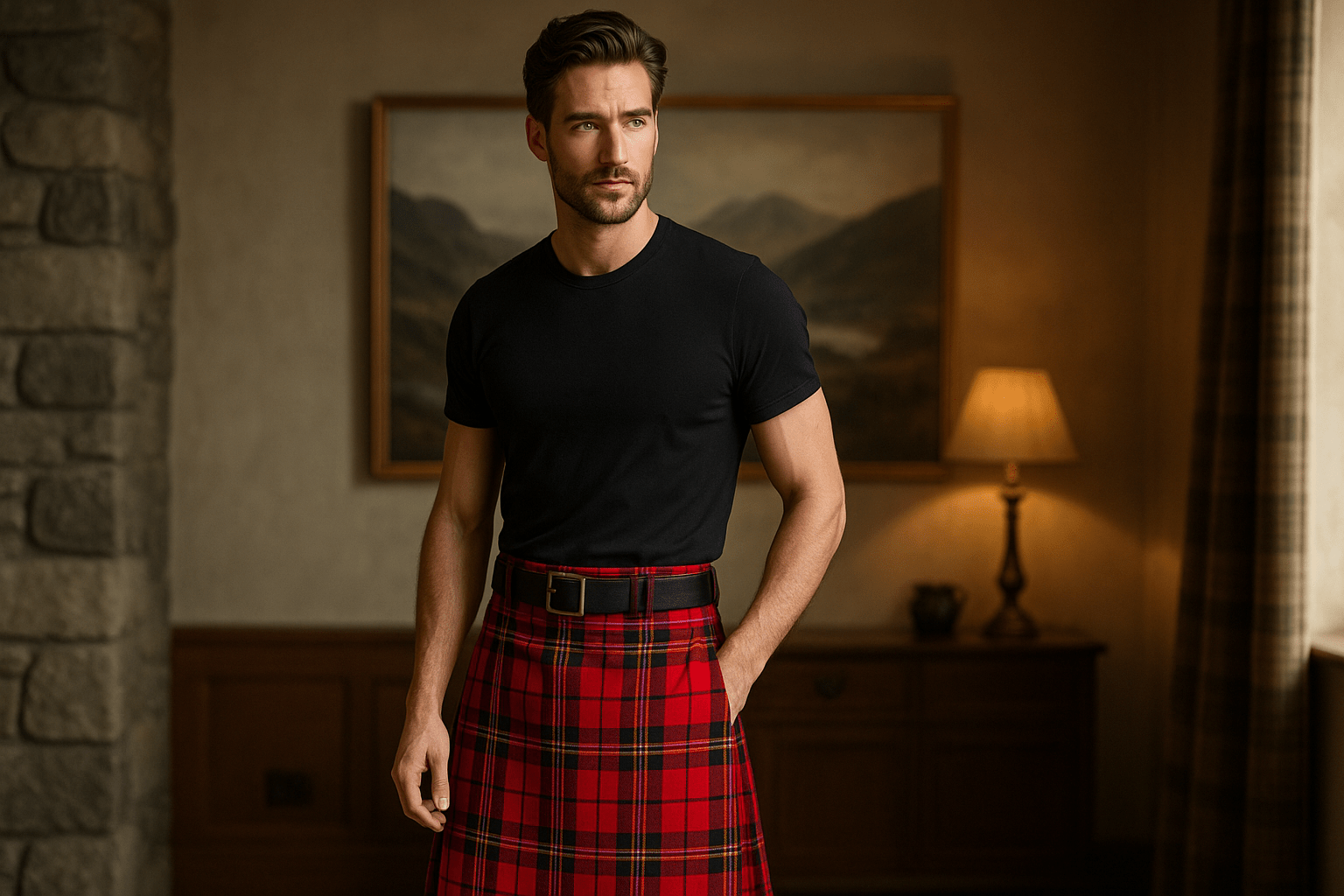
- For a relaxed look: pair a kilt with a fitted t-shirt, a casual shirt or a denim jacket
- Footwear: traditional brogues remain the classic choice, but boots and even clean trainers now work well for everyday styling
- Accessories: a belt, sporran or simple kilt pin can sharpen the overall outfit
Caring for your kilt
- Dry-clean traditional wool kilts to keep the tartan crisp and the pleats sharp
- Hang the kilt using kilt clips rather than folding it, to preserve the pleats
- Store it somewhere cool and dry, away from direct heat and sunlight
Final thoughts
Wearing a kilt isn't only about style — it's a way of carrying history, identity and self-assurance. Whether you wear yours in the traditional way or reinterpret it for a modern wardrobe, a well-fitted kilt remains one of the most distinctive and versatile garments you can own.

Written by Junaid Jutt

